Where to Start Marvel Comics: Easy Entry Points
In this article 9 min read
- Knowing where to start Marvel comics feels overwhelming, but it isn't
- How Do I Start Reading Marvel Comics in 2026?
- What Are the Best Foundational Marvel Comic Runs for Beginners?
- What Are the Different Ways to Read and Collect Marvel Comics?
- What Common Mistakes Should New Marvel Readers Avoid?
- What Should You Do After You’ve Started Reading Marvel Comics?
- Frequently asked questions
Knowing where to start Marvel comics feels overwhelming, but it isn't
Many new readers feel intimidated by Marvel Comics due to the sheer volume of material. Tens of thousands of comics across thousands of series titles all contribute to an ongoing shared universe continuity that began with Fantastic Four #1 in 1961. This vast history can make it seem like you need to read everything from the very beginning to understand anything. This is a common misconception.

The vastness of Marvel Comics can feel daunting, but you don’t need to read it all from the beginning.
However, this perceived barrier is largely unfounded. Marvel designs its publishing strategy to be accessible to new readers at various points. While the universe has a long history, stories are often self-contained within specific runs or arcs. New series frequently show you where to start Marvel comics. Think of it less as a single, unbroken novel and more like a long-running television series with many seasons. You can often jump into a new season and catch on quickly.
Readers seeking where to start with Marvel comics often think they are exclusively for children or only feature traditional superheroes. Marvel explores a wide range of genres and complex themes. It tackles mature subjects and diverse character perspectives that appeal to readers of all ages. For instance, the belief that the gamma bomb solely created the Hulk is a misconception. Bruce Banner’s fractured psyche from childhood abuse was a significant factor. The gamma bomb gave the Hulk an outward physical form.
How Do I Start Reading Marvel Comics in 2026?
See where to start marvel comics in 2026: focus on current, recently concluded story arcs, ongoing runs, brand-new titles. Designers create these with contemporary audiences in mind and they often provide necessary context within the story. Marvel frequently launches new initiatives or relaunches popular characters. This creates perfect entry points without requiring decades of prior reading.

Start with current stories to easily dive into the Marvel Universe.
A prime example of where to start marvel comics is Marvel’s recent relaunch of the X-Men line of comic books with “From the Ashes.” This initiative began in mid-2024. It continues into 2026. This relaunch serves as an explicit jump-in point for new readers, introducing many new series starring various mutants. Marvel makes a deliberate effort to make the X-Men accessible again, moving past complex, long-running storylines. Marvel offers fresh narratives. You can pick them up without extensive background knowledge.
When selecting a current run, look for:
- New #1 Issues: These are always intended as starting points.
- New Creative Teams: A change in writer and artist often signals a fresh direction for a character.
- “Jump On Here” Marketing: Marvel often explicitly labels issues or arcs as good entry points.
By starting with a recent or ongoing story, you engage with the current direction of the Marvel Universe. This makes discussions with other fans relevant. It also avoids the need to catch up on decades of continuity immediately.
What Are the Best Foundational Marvel Comic Runs for Beginners?
While advocating for starting with current material, understanding foundational runs can enrich the experience. They provide essential context for many characters and concepts. These are not necessarily where one must begin, but rather excellent series to explore once you find your footing.

Foundational runs offer deep dives into key characters once you’ve started reading.
For those looking to understand the origins of the Marvel Universe’s core, we recommend considering these foundational runs:
- Fantastic Four #1-67 (1961-1967) by Stan Lee and Jack Kirby: This is where the modern Marvel Universe truly began. It established its tone, shared continuity, and the idea of flawed, relatable heroes. This run introduces many concepts that are still central today.
- Amazing Spider-Man #1-50 (1963-1967) by Stan Lee and Steve Ditko: This run defines Peter Parker as the quintessential relatable superhero. He struggles with everyday problems alongside his heroic responsibilities. This is a masterclass in character development and storytelling.
- House of X / Powers of X (July 2019) by Jonathan Hickman: While more recent, this miniseries completely redefined the X-Men mythology. It served as a major relaunch point, influencing all X-Men titles that followed. This is a modern classic that acts as a strong foundational text for the contemporary X-Men era.
Avengers disassembled and new avengers
For a bridge into the modern era, many readers often point to Brian Michael Bendis’ seminal work:
- Avengers Disassembled (#500, September 2004) and New Avengers #1 (January 2005): These events dramatically reshaped the Avengers franchise. They kicked off a new era of Marvel storytelling that profoundly influenced the subsequent two decades of comics. Many consider them the starting point for the “modern Marvel” continuity that led into many major events and character developments seen in the 2000s and 2010s.
These runs are available in collected editions, making them far easier to access than tracking down individual vintage issues. They are excellent choices for when you want to dive deeper into the history and evolution of specific characters or the universe as a whole, but they are not prerequisites for enjoying current stories.
What Are the Different Ways to Read and Collect Marvel Comics?
Once you decide where to start, you’ll need to consider how you want to read and collect your comics. Marvel offers various formats, each with its own advantages for different types of readers and collectors.

Marvel Comics are available in various formats to suit every reader’s preference.
Single Issues
These are the traditional monthly comic books, typically 20-30 pages, that continue an ongoing story. Marvel releases them weekly or monthly. For a collector, a key issue like Amazing Spider-Man #14 (first Green Goblin) can be valued between $1,200 and $2,200 in CGC 6.0 condition. Hulk #181 (first full Wolverine) might fetch between $3,500 and $5,500 in CGC 7.0. However, most new single issues hold little monetary value unless they become significant first appearances or rare variants.
- Pros: Immediate access to new stories, the thrill of weekly releases, option for collecting rare variants.
- Cons: Can be expensive to keep up with multiple series, stories are often incomplete until collected, require careful storage to maintain condition.
Trade Paperbacks (TPBs)
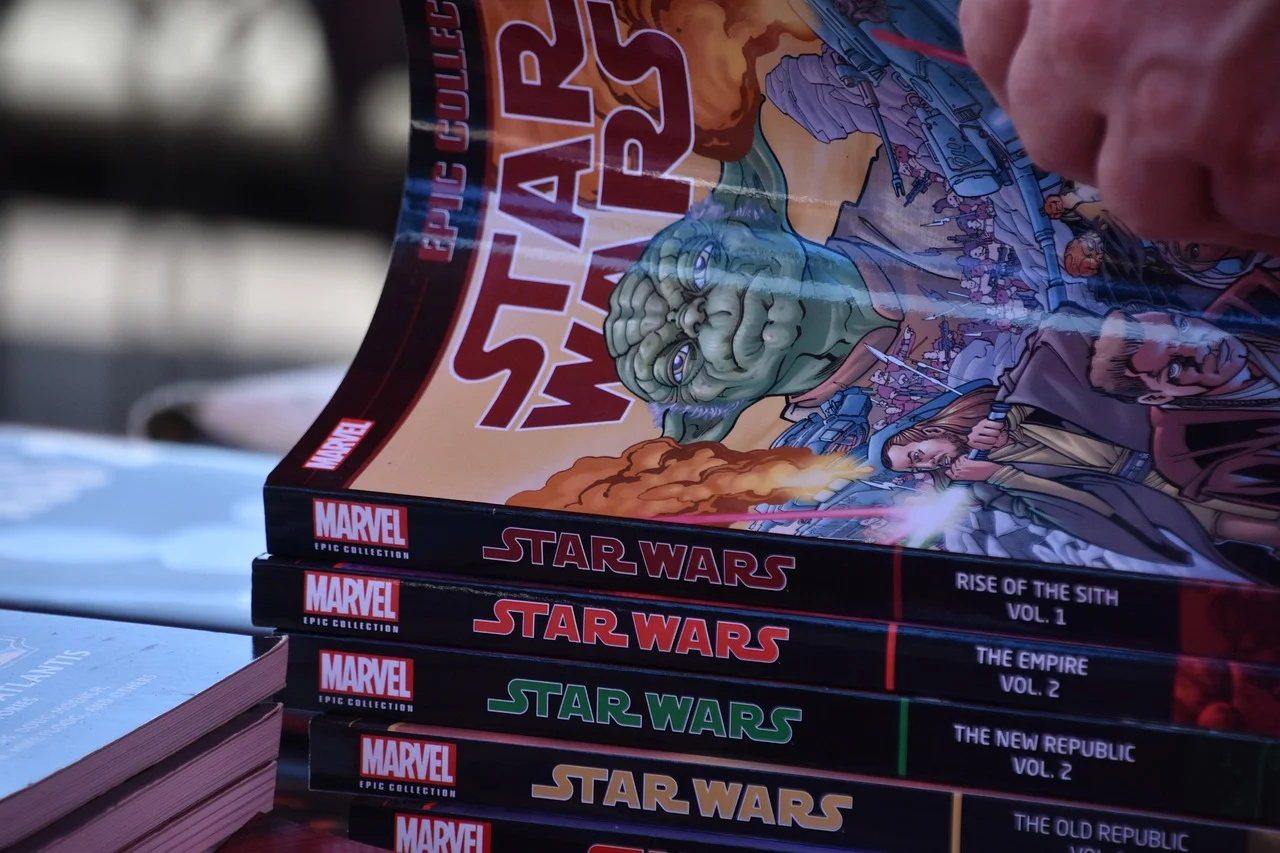
Trade Paperbacks collect several single issues, typically an entire story arc, into one volume. Publishers usually release them a few months after the individual issues have concluded. TPBs are an excellent way for new readers to catch up on a complete story without tracking down every single issue.
- Pros: Cost-effective, convenient for reading complete stories, durable format, good for casual readers.
- Cons: Not as current as single issues, less appeal for collectors focused on first prints.
Omnibus Editions
Omnibuses are oversized, hardcover collections. They gather entire runs by a specific creative team or character, often spanning 25-50 issues or more. These are premium products. They are usually more expensive. However, they offer comprehensive collections of significant arcs or eras.
- Pros: Collects massive amounts of content in one durable, high-quality volume, often includes bonus material.
- Cons: High upfront cost, very large and heavy, can be intimidating for new readers due to volume.
Digital Subscriptions: Marvel Unlimited
For digital-first readers, a subscription to Marvel Unlimited offers access to read through the vast majority of the entire Marvel Universe digitally. Marvel typically adds new issues approximately three months after their physical release. This is by far the most cost-effective way to explore decades of Marvel history.
- Pros: Access to tens of thousands of comics for a single monthly fee, convenient on multiple devices, excellent for exploring new series or catching up on old ones.
- Cons: Not current with new releases, no physical collection, requires a digital device.
Marvel Unlimited is an invaluable tool for any new reader. It allows sampling various characters and series without committing to physical purchases, helping discover what truly resonates before investing in collected editions or single issues.
What Common Mistakes Should New Marvel Readers Avoid?
Navigating the Marvel Universe can be tricky, and new readers often fall into certain traps that can hinder their enjoyment. We want to highlight a few common pitfalls so they can avoid them.

Trying to Read Everything in Strict Chronological Order
As mentioned earlier, this is the biggest mistake. The Marvel Universe has operated on a “sliding time scale” since its inception. While almost 60 real-world years have passed since Spider-Man’s first appearance, only about 10-15 years have passed in the story. This means characters like Peter Parker are still in their late 20s or early 30s, not approaching retirement. Figuring out where to start marvel comics from 1961 onwards in publication order is an almost impossible task that will likely lead to burnout and frustration. Focus on self-contained stories or character runs instead.
Only Following Movie or TV Continuity
While the Marvel Cinematic Universe (MCU) draws heavily from the comics, it is its own separate continuity. Expecting the comics to perfectly mirror the movies will lead to confusion. Characters, origins, and storylines often differ significantly. Enjoy both for what they are, but don’t expect a direct translation.
Skipping Over Characters You Don’t Immediately Know
If you wonder where to start in Marvel comics, its interconnectedness is its beauty. A character you have never heard of might become your new favorite. This character might also play a important role in a story you are already enjoying. Give new characters a chance. You might be surprised by the depth and history they possess. Marvel’s rich “tapestry” of characters is one of its greatest strengths.
Not Utilizing Online Resources (Carefully)
Websites like Comic Book Herald and Marvel Guides (which Google’s facts reference) offer excellent reading orders and explanations. However, be wary of unofficial or outdated fan wikis that might contain spoilers or incorrect information. Use trusted sources to guide your reading, but don’t let them dictate your enjoyment. If where to start marvel comics feels too complex, simplify it for yourself.
What Should You Do After You’ve Started Reading Marvel Comics?
After you’ve picked a starting point and enjoyed your first few Marvel stories, the next step is to let your interests guide you. The Marvel Universe is vast, and there’s always something new to discover.

If you loved a particular character, seek out more of their solo series or appearances in team books. If a specific writer or artist impressed you, look up other works they’ve done for Marvel. Many stories will also naturally show you where to start marvel comics with related series or major crossover events. For example, read New Avengers #1 (2005), then explore events like Civil War or character runs.
Don’t be afraid to jump around a bit. The “sliding time scale” and frequent reboots let you catch up quickly during a mid-run start. Use Marvel Unlimited to sample different titles before buying physical copies. Continue reading what you enjoy. Let your personal preferences guide where to start marvel comics in the Marvel Universe.
Related guides
Sources: A to Z in Marvel Comic Series
Frequently asked questions
Is it hard to get into Marvel Comics?
It can seem hard due to the sheer volume of stories and decades of continuity, but it’s not. Marvel consistently creates new jump-on points and reboots popular characters, making it easy for new readers to start with current or recent storylines without needing to know everything that came before.
Do I need to read every Marvel comic?
No, you absolutely do not need to read every Marvel comic. Trying to read everything from the beginning is often overwhelming and unnecessary. We recommend picking a character, a specific story arc, or a new series as a guide on where to start marvel comics and simply starting there, then expanding your reading based on what you enjoy.
What is the best way to read Marvel Comics digitally?
The best way to read Marvel Comics digitally is through a subscription to Marvel Unlimited. It provides access to tens of thousands of comics across the entire Marvel Universe, usually with a three-month delay on new releases, offering an incredibly cost-effective way to explore.